My Role
Product Designer
Case Study
My Role
Product Designer
Users
Lab operations teams across enterprise hospital networks
Outcome
Reduced configuration time from 6+ hours to 1 hour. Reduced adoption time and user errors.
Timeline
3 months
Guided Case Walkthrough
Configuring one test for incoming samples still takes six-plus hours. Work splinters across tools and PM, operations, and engineering handoffs; issues surface late, at validation or launch. Labs need one path that works for both seasoned and newer managers without accuracy depending on endless rework.
| Metric | What success looks like |
|---|---|
| Time to completion | Finish a configuration in under two hours—fast enough for real lab throughput. |
| Error prevention | Fewer dead ends in setup so validation and launch are not where errors first appear. |
| Data access | Inputs available in flow—no constant detours to spreadsheets, tickets, or other systems. |
Primary
Lab managers who own configuration: both fast, experienced operators and newer managers accountable for launch-ready setups.
Secondary
Technicians who support configuration: reference data, validation walkthroughs, and catching gaps before launch.
One coherent flow from definition through sign off:
UX/UI practice plus a structured research-agent workflow kept exploration from going ad hoc.
Weekly sessions with users pressure-tested flows and edge cases. Major tradeoffs were checked against the metrics above—time, errors, and in-flow data access.
Research ran on a weekly cadence and was woven into every sprint—flows, language, and edge cases stayed grounded in real use. What steps I took, and how those steps shaped the work:
Weekly research sessions throughout the project. Findings were synthesized weekly using a custom research agent and organized by category for quick reference.
B.A. in Applied Psychology. Cognitive Load Theory, Progressive Disclosure, and Error Prevention vs Error Recovery all directly impacted this design.
AI-augmented research workflow
Built a custom AI agent to synthesize weekly user interview findings into structured themes. Turned raw sessions into actionable design direction.
Used Cursor throughout the project for rapid prototyping and exploratory design work, accelerating iteration cycles and reducing time from insight to concept.
Continuous weekly research sessions. Custom AI agent synthesized findings into structured themes each week—consistent, repeatable, and directly actionable for design.
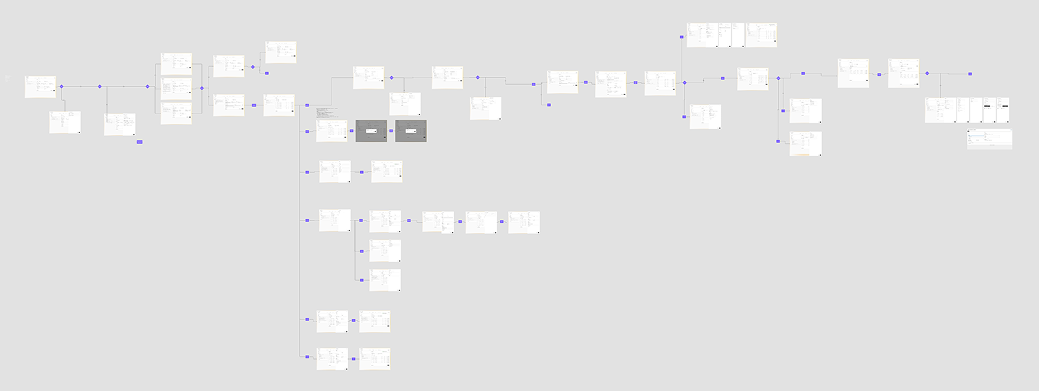
Mapped setup around where teams got stuck: Define → Configure → Validate → Launch. Each phase gated on completeness to prevent errors surfacing too late.
PM + Designer + Engineer working tightly across every sprint. Presented work-in-progress weekly, aligned the squad, and incorporated feedback in the same cycle.
Dev handoff and QA support through launch. Post-launch, tracked completion rates, drop-off points, and validated design decisions landed as intended.
Mapped the setup lifecycle around where teams actually got stuck.
A system that can grow with new scenarios and team structures.
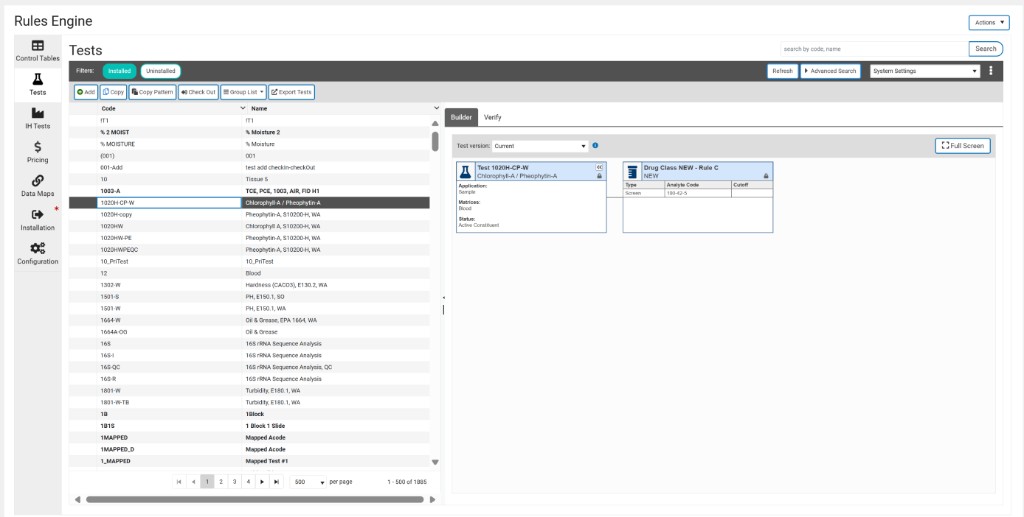
New end-to-end workflow plus the first Clinisys feature on a new design system: aligned UX patterns, components, and micro-behaviors with design ops and engineering for consistency and extension.
Test Builder became the template for other configuration domains (e.g. clinical and anatomical pathology) instead of reinventing structure and progression each time.
Grounded in UX/UI, user feedback, and Overview metrics—outcomes tied to business goals with numbers where we have them.
Lab ops teams that previously needed engineering for every new test completed setups independently after launch. Engineering was no longer the bottleneck for routine configuration.
Final review surfaced section-level status before submission—fewer surprise failures at launch. Inline errors kept fixes in context and reduced rework loops.
Test Builder became the pattern for clinical and anatomical pathology configuration—reusable, not a one-off. First Clinisys design system contribution; shared patterns extended by other teams.
The sales team confirmed that Test Builder was a key selling point for two new clients that have signed multi‑million dollar contracts with Clinisys since January.
Why this matters: The 6× efficiency gain wasn’t just a UX win—it became a driver in new customer acquisition at Clinisys. Design moved a business number.
Chapter 1 of 6
Explore more projects


